WELCOME TO OUR BLOG

We're sharing knowledge in the areas which fascinate us the most
click

How to Choose the Right Sinkers for Circular Knitting Machines in 2026 | Qattex Guide

By Qattex April 17th, 2026 210 views

How to Choose the Right Sinkers for Circular Knitting Machines in 2026


Introduction

Circular knitting machine sinkers are core precision components that directly determine fabric quality and machine stability. Mismatched or low-quality sinkers cause 42% of common fabric defects, accelerated needle wear and unplanned downtime.

In 2026, as 35+ RPM high-speed and 32G-40G fine-gauge machines become standard, sinker precision requirements have increased significantly. This guide provides industry-verified selection criteria based on Qattex's 31 years of experience.

What Are Sinkers and Why They Matter

Sinkers move radially along the sinker plate, cooperating with needles to form uniform loops. Their core functions:

  • Hold formed loops to prevent rising with needles
  • Pull new loops to consistent length
  • Support fabric to maintain uniform tension

High-precision qualified sinkers reduce fabric rejection rate by 15-22% and extend needle life by 25-35%.

Key Selection Criteria

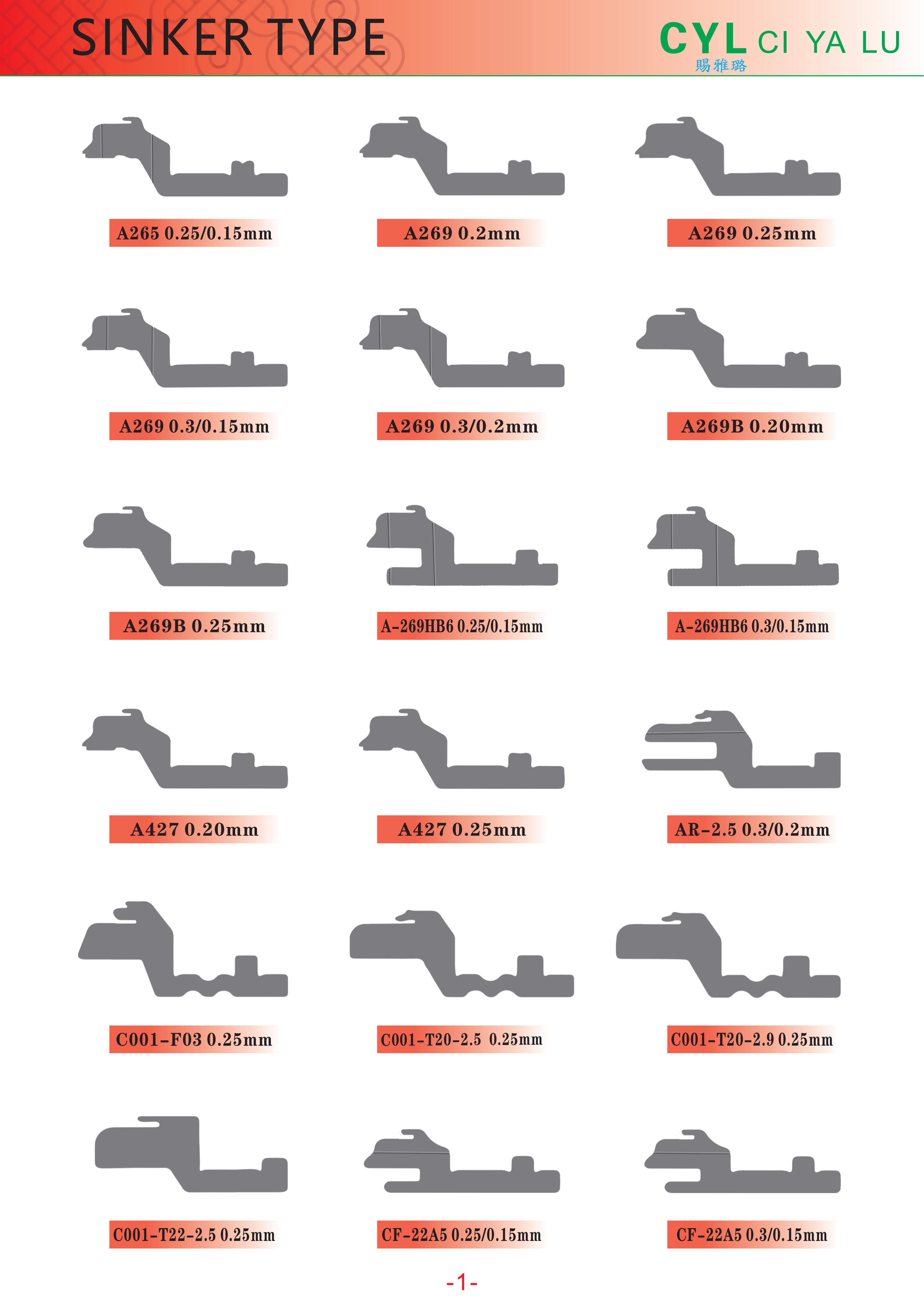
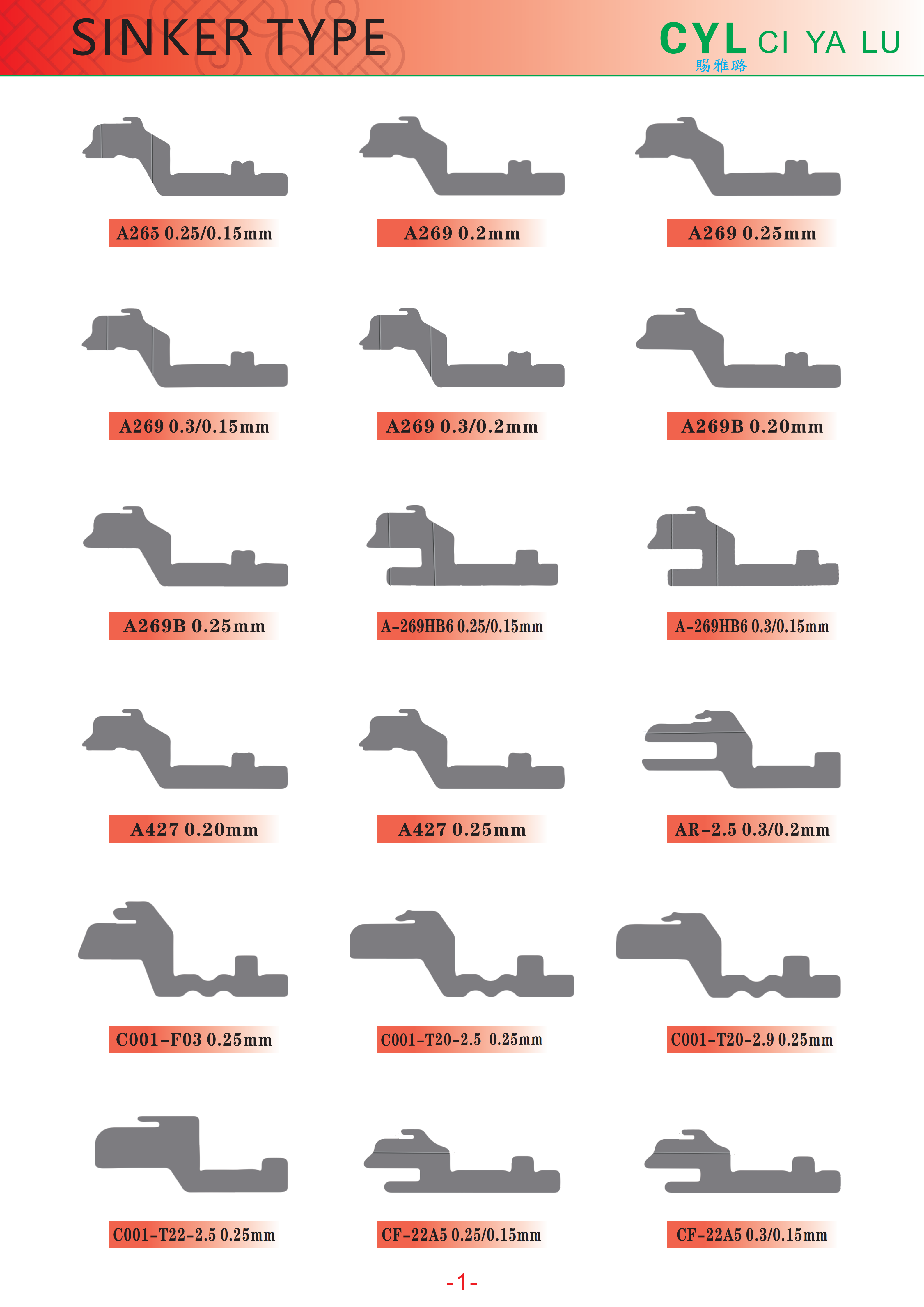
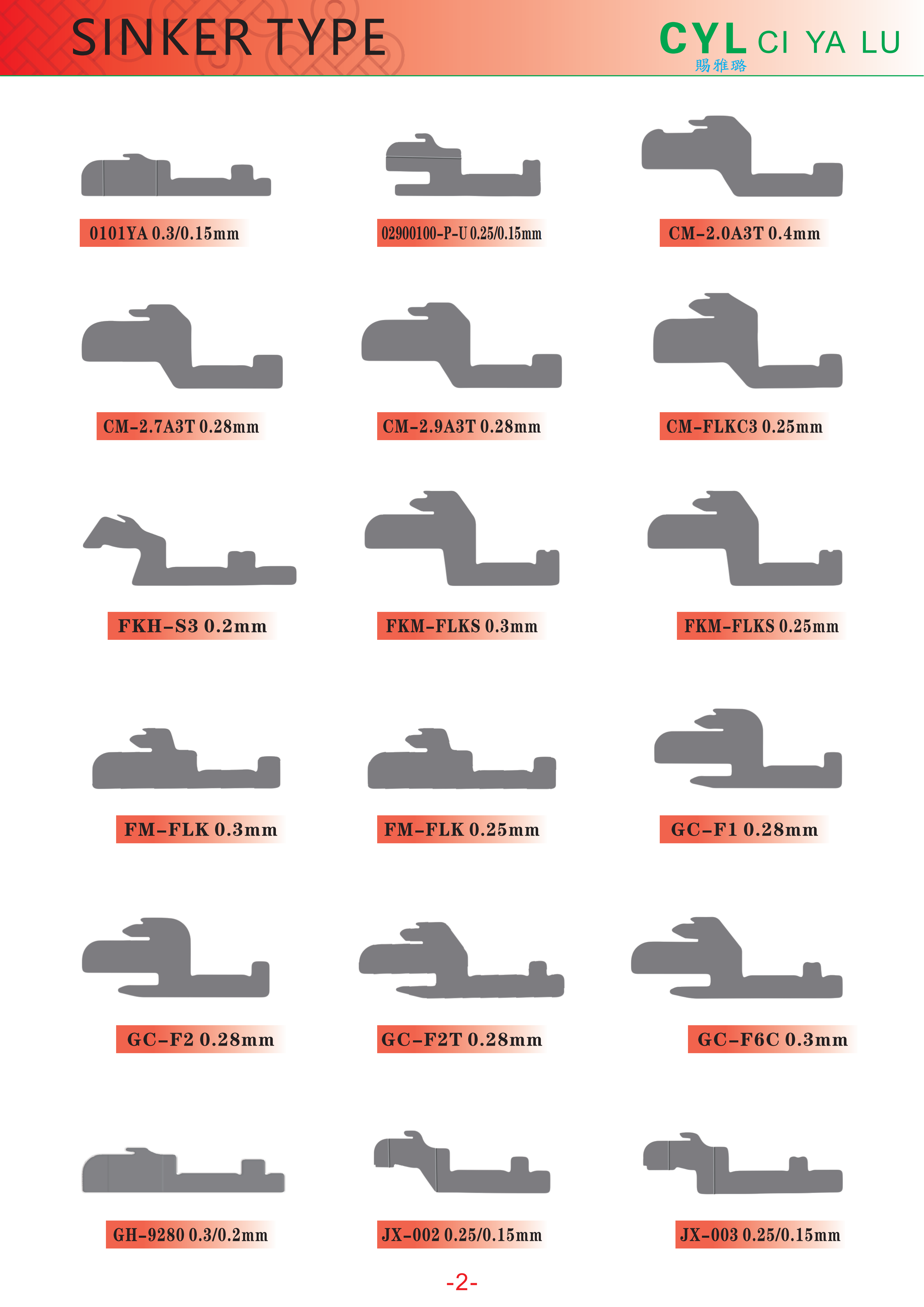
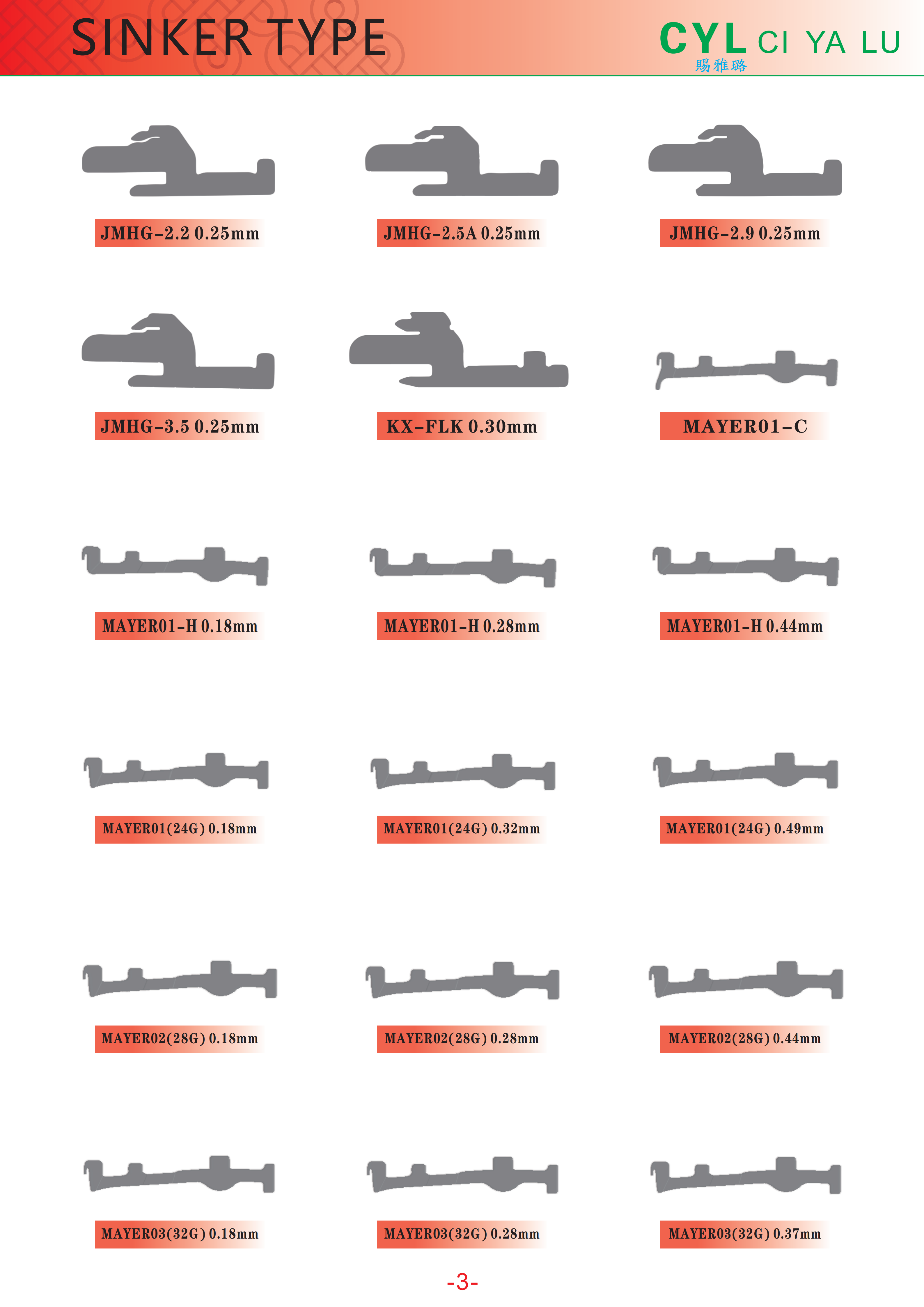
1. Sinker Type (Non-interchangeable)

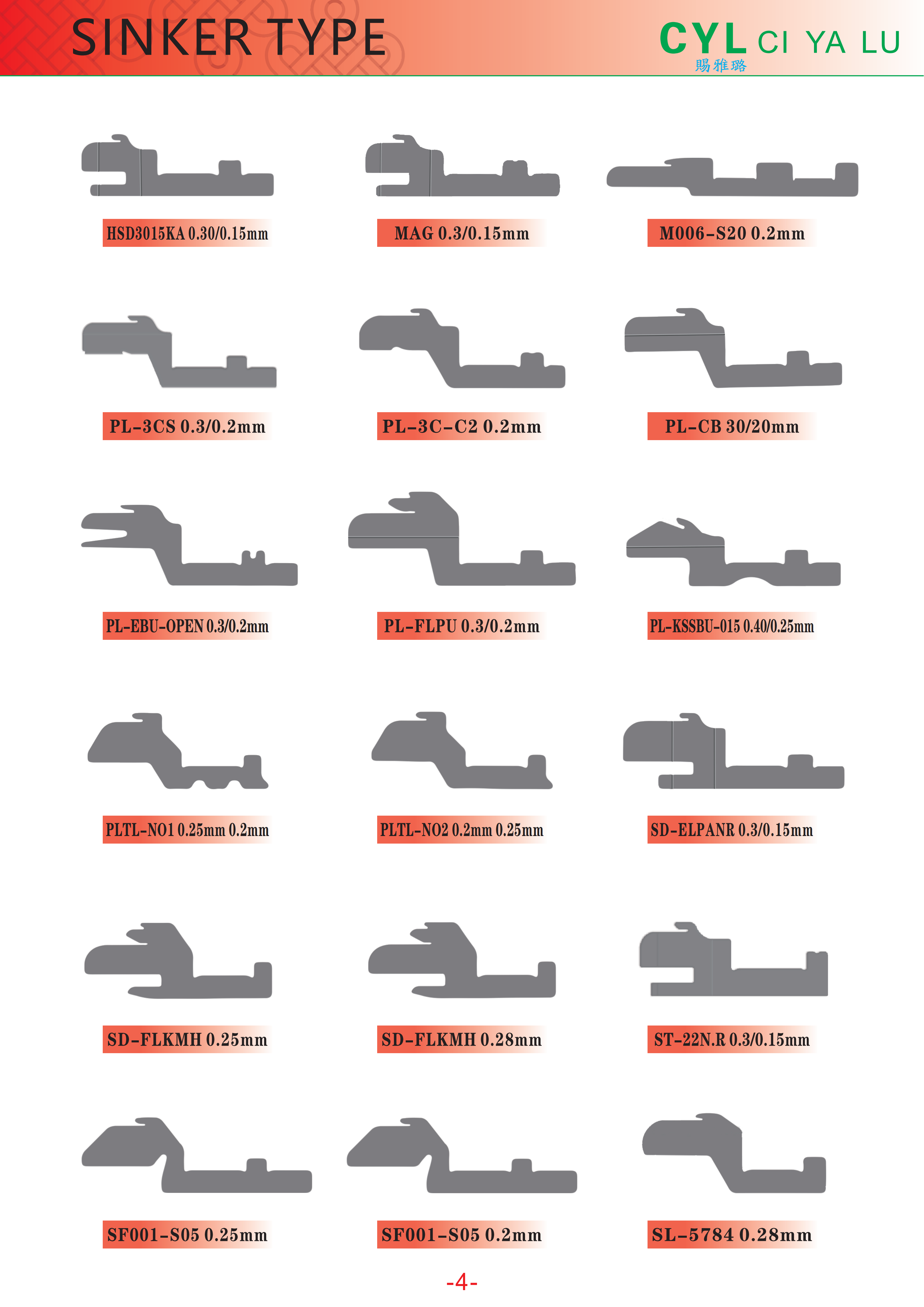
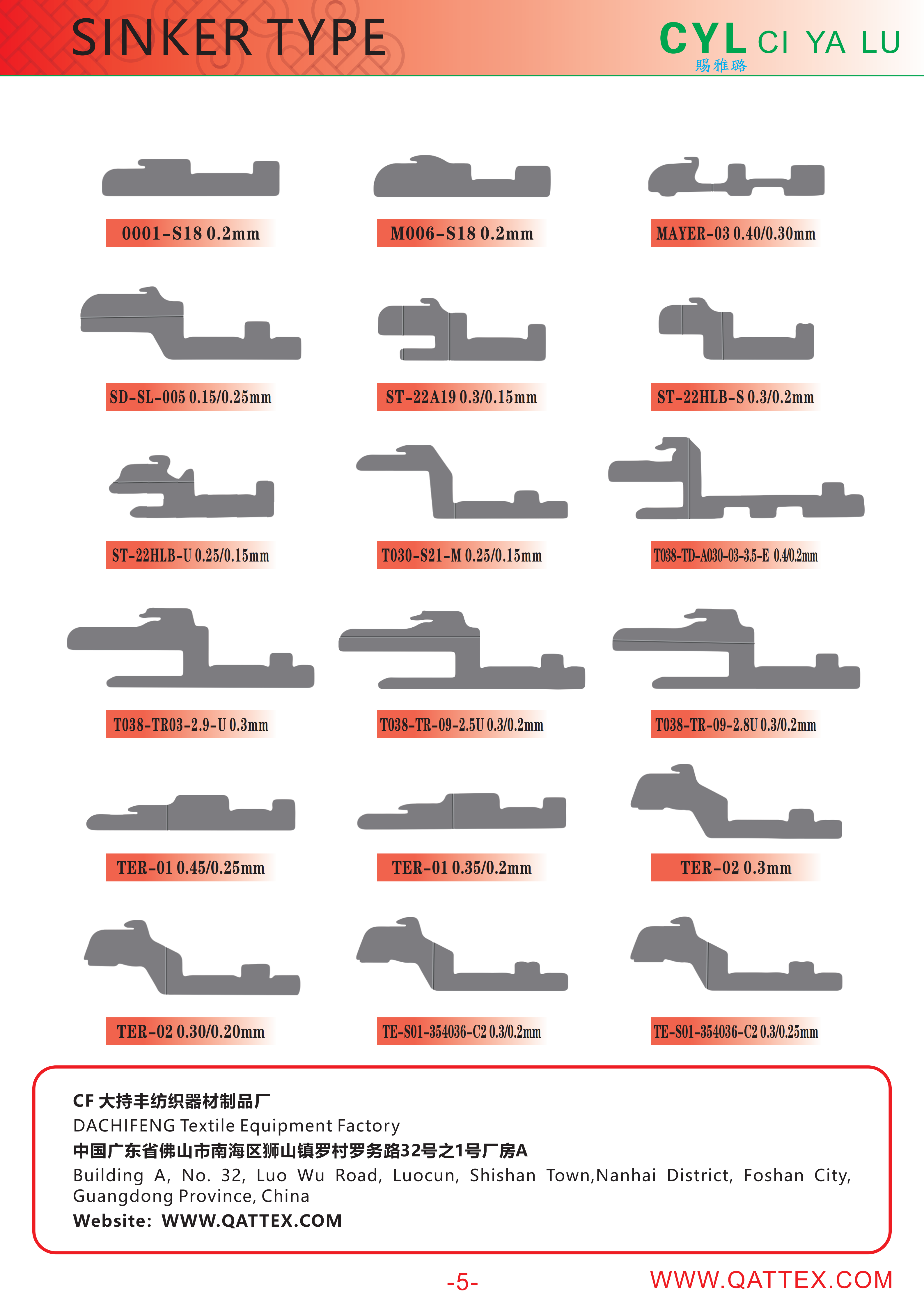
  • Single jersey sinkers: For single jersey, pique and interlock machines
  • Jacquard sinkers: For computerized jacquard machines
  • Transfer/Lycra sinkers: For special process requirements

2. Exact Gauge Compatibility

Match sinker gauge to your sinker plate gauge, not just the cylinder gauge. A difference of more than 0.02mm will cause permanent needle damage and fabric stripes.

Standard gauges: 14G, 16G, 18G, 20G, 22G, 24G, 28G, 32G, 36G, 40G.

3. Critical Dimensions

Nose thickness is the most important parameter:

  • 0.15mm: 28G-40G fine-gauge machines
  • 0.20mm: 24G-28G general-purpose machines (most common)
  • 0.25mm: 20G-24G medium-gauge machines
  • 0.30mm: 14G-22G coarse-gauge machines

4. Material & Surface Treatment

  • Premium material:  high-carbon chromium steel (HRC 56)
  • Surface treatment:
    • Gas nitriding: 8000-12000 hours service life (standard)
    • Ion nitriding: 12000-15000 hours
    • Hard chrome plating: For abrasive yarns

5. Machine Brand Compatibility

Qattex sinkers are manufactured to original factory drawings and compatible with: Mayer & Cie, Terrot, Santoni, Pilotelli and all major Chinese brands.
5-Step Selection Process

  1. Record your complete machine model and serial number
  2. Check the gauge marking on the sinker plate
  3. Measure nose thickness of an original unused sinker
  4. Confirm your fabric type and yarn count
  5. Place bulk order after verification


Common Mistakes to Avoid

  • ❌ Mixing sinkers of different brands or batches
  • ❌ Replacing only broken sinkers (replace all at once)
  • ❌ Installing sinkers in reverse direction
  • ❌ Extending replacement cycle beyond wear limits
  • ❌ Using low-carbon steel sinkers

Frequently Asked Questions

Q: When should I replace my sinkers?

A: Replace when you see burrs on the nose, needle breakage triples, or nose wear exceeds 0.03mm.

Q: Can sinkers be reground and reused?

A: No. Regrinding changes critical dimensions and destroys the hardened surface layer.

Q: What is the standard replacement cycle?

A: 8000-12000 operating hours for standard nitrided sinkers (24/7 cotton production).

Q: Do you make custom sinkers?

A: Yes, we can manufacture custom sinkers from your drawings or samples (MOQ 1000 pieces).

Conclusion

Choosing the right sinkers is essential for efficient production and high-quality fabric. A small investment in premium sinkers delivers significant returns in reduced downtime and lower rejection rates.

Qattex is a leading supplier of circular knitting machine spare parts with 30+ years of experience. We offer a full range of standard and custom sinkers, as well as timing belts, tangential belts and control panels.

If you need a quote or technical consultation, please contact us today. Our engineering team will respond within 24 hours.

5 Common Circular Knitting Machine Problems That Cause Downtime | Maintenance Guide
Previous
5 Common Circular Knitting Machine Problems That Cause Downtime | Maintenance Guide
Read More
Lint Buildup on Circular Knitting Machines: Causes & Deduster Solutions
Next
Lint Buildup on Circular Knitting Machines: Causes & Deduster Solutions
Read More
Message Us